My ruminations and bold conclusions are based on a single trip of our family to southern Italy, of two weeks. So the data is sparse and the conclusions would not pass the hypothesis test of even the most sophomoric statistician. But let me indulge in the pleasure of jumping to wild conclusions with little data.
Once our flight for Rome takes off from New York, it is as if the passengers have been fantastically transformed into Italians, a large majority at least. They were indistinguishable Americans so far but as soon as the aircraft door closes, this magical transformation happens. I am reminded that Italian is a wonderful, melodious language well accoutred with all the animation of hand gestures and facial expressions. Two Italians speak in wonderful crescendos at the end of each sentence as if they are either going to fall into a warm, nay hot, embrace, or get into a fistfight — there are no temperature levels in between these two extremes.
Is Italy a happy place?
In the World Happiness Index Italy does not rank very high, only a distant, grouchy 40 and that too a 10-place climbdown from five years back. They are laughing and gesticulating and saying one of those wonderfully ambiguous and mellifluous words, “Alora” and a generous helping of “Tutti”, “Grazie” and “Prego”. And they are happy as can be.
Italians are not nearly as orderly as the Swiss or the German or even the Dutch. The line at the airport to get to the train station could not really be called a line; it was more like a plane, with multiple odd-shaped parallelograms where people were jutting in and out. They were doing all this quite politely though, none of the vitriol that would befall anyone in India trying to cut into a line, orderly or not, unless of course you are connected through blood relation to someone high up in the office that you are lining up for. At this same train station, they waived us in to take the earlier train without getting hung up on procedural niceties like changing the ticket online. Which I tried to do online but it did not work. This was a recurring theme through our two weeks in southern Italy — things would not work in unexpected ways but people would take it in their strides. And of course, the hapless tourist face works with kind-hearted people all over, as I can personally attest from countless corners of the world.
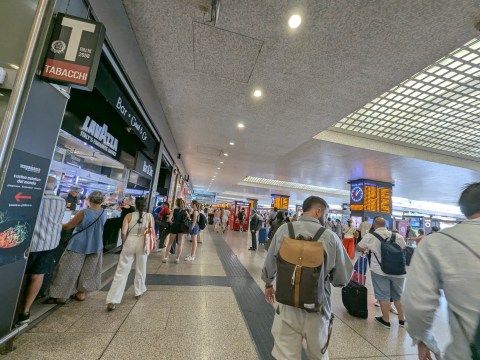
The power of cold hard cash
I am the kind of traveler who does not solely trust himself to the power of plastic or the power of payment apps on phones. With the surprising exception of India where phone payment apps are ubiquitous, I have found in most parts of the world, cold hard cash can be a lifesaver in unexpected tight situations. So I look up a bank where I can go to exchange some of my dollars. It is conveniently walkable from my hotel —- though in Naples, the very opposite end of town is also considered walkable —- here it would take me less than 10 minutes to reach the bank. I find my way to the bank and meet an unexpected road bump, namely, how to enter the bank. I came in with fluffy notions that I can march boldly in and be greeted by phalanxes of welcoming clerks and non-existent queues. Not so in Naples. I have to wait patiently outside the bank to even get in. I ring two buttons next to the door with the unrealized expectation that one will ring a bell somewhere in the innards of the building. I gain entry finally when someone comes out of the bank building.
Upon entry, I find three well-dressed bank officials each in their own rooms with doors open. And outside in the common area there are two ATMs. Armed with my passport, I go into these officials’ rooms wanting to exchange my US dollar for Euros. They look at me as if I have asked for vegan pizza in Napoli, which is to say with glances that convey I am borderline certifiable. And then they go back to the super important work they are doing click-clacking on their computers. I manage to get some Euros out from the ATMs and later on, it will turn out to be a real good thing. Else, we would have had to suffer the wrath of taxi drivers or been denied entry to ferries because we have to pay for excess luggage, in cash, right when boarding.
Naples, gritty and lovely
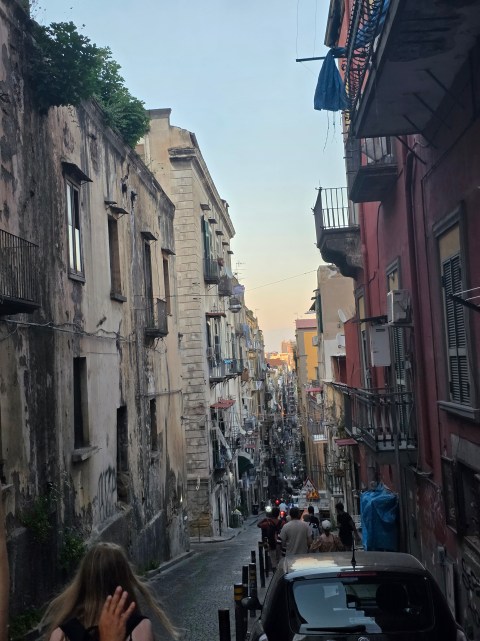
The part of Naples that will stay with me is the Quartieri Spagnoli or the Spanish Quarter. Till late, this was a part of Naples that non-natives would be advised to stay away from. But its grittiness is now its USP. As I walk through its labyrinthine winding cobbled streets, I see signs of daily life all around. Isn’t this the very definition of being non-touristy while being a tourist? I see clothes set out to dry on clothes lines from second-floor balconies, I see countless murals and makeshift shrines to Maradona (does Argentina still deify him as much?), and locals languidly chatting on their doorsteps. And to ensure I keep my senses about me, there are Vespa scooters precariously zipping through these streets, missing people by inches. The street experience is completed by having street food there, Pizza Fritta (fried pizza) and Sfogliatella (a shell-shaped pastry), not particularly healthy, and not particularly hygienic, if I were to peer into the backrooms behind the streetside stalls.
Island hopping
In the second part of our Italy trip, we get to Ischia, an island off the Gulf of Naples. It is an island of 65,000 residents and 4 million tourists. It is a fairly large island, the largest of the three off Naples, the others being Capri and Procida. An inexpensive hydrofoil ride takes us from Naples to Ischia and emphasizes what I had read — this ferry ride is utilitarian in its speed and enjoyable ticket fares, as well poetic. The ferry ride is poetic as it takes you on the journey through the Gulf of Naples for an hour and a little over, with wonderful vistas of the coastline and pristine waters. For quite long stretches of the journey, there is only the aquamarine water, rocky outcrops with trees bending over the water, and the wake left behind the ferry.
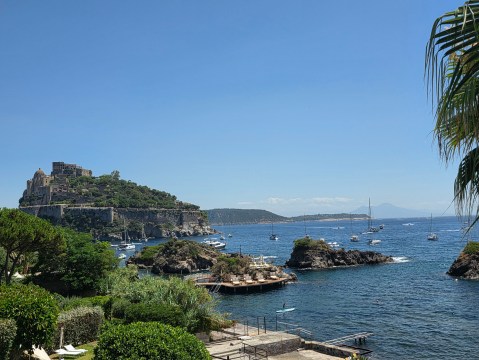
Any place you go to, no matter how off the beaten path, for the people who live there, it is prosaic. This is where they trudge up the steep slopes with their load of supplies, this is where they fend off banal questions from tourists, this is where they navigate pencil-thin roads that are hardly believable are made for cars. But it is here, the happiness index folks should gather vitally useful information from. You ask the residents what there is to do in their city, or town, or village. The happy people are effusive in telling you of all the wonders that you absolutely must savor, else your life would lose all meaning. This applied well to the merry people of Ischia. To a person, they extolled the health virtues and the rapturous delight of thermal spas on their island — this turned out to be very true, the rapturous delight part at least as we soaked in the better part of a day at Poseidon Thermal Spa Garden, a huge expansive “park” with dozens of variations on the traditional spa. The health benefits are debatable, and debated. But this does not prevent Ischia from being a magnet for tourists from all over Italy and even beyond, flocking to its thermal baths.
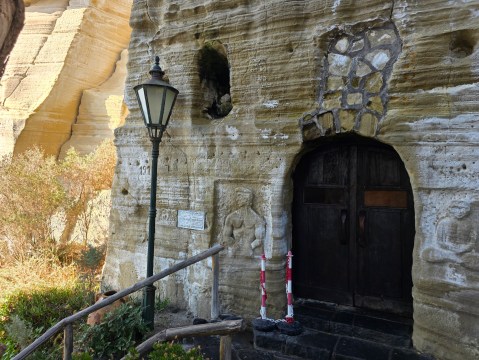
The latter part of our Italy visit was spent trudging up and down the steep and narrow streets of Sorrento and using that as the jumping off point for the much-vaunted Amalfi coast. Though both were bulging with tourists, there were enough off-the-beaten spots to make it worth our while. How we sat white knuckled through the bus rides along the hair-raising, hairpin bends on the roads of the Amalfi coast and ended our exertions over glasses of Sorrento limoncello are tales for another day, and another post.
 Distant Whispers from an Academic Engineer's World